Will this be our home from home?

As we drove from the airport to SAIntS, even in our weary state, we tried to absorb everything we saw along the road. We were immediately struck by the volume of people walking at the sides of the road. Some were carrying things to sell; mops, bananas, phone credit and even puppies. Others were balancing buckets of water or baskets of fruit expertly on their heads – a first African stereotype that was proving to be true. A more surprising sight for us was the first police road block; police with rifles standing beside an old oil drum at the side of the road, checking the passing cars. This time we did not have to stop. And all the way from the airport to the school in the Nyambadwe area of town, we had hills and mountains on both sides; first Michiru mountain to our right – impressive and imposing; then Ndirande mountain to our left – such a distinctive shape with its two humps and the masts on top.

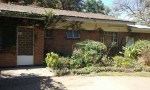
Just as we were taking in these mountainous sights, the car indicated left opposite a Puma garage and turned into a small drive. A sign read, “Welcome to St Andrew’s International High School”. We had heard so much about St Andrew’s; now we were actually here. The campus seemed very leafy, with green trees and flowers everywhere. The road became a dirt track as we turned the corner and the guard let us through the main gates, down the hill, past many well-established trees and to our metal gates. We had pulled up in front of a red brick bungalow, situated in a large garden with many pretty flower beds; this was a well-tended green space – no wonder we had been warned we would need a full-time gardener! There were bamboo, palm trees, papaya, avocado, mango and many other fruit trees. And the birds…wow, immediately these sounds were not European; these were most definitely African birds, making exotic noises I had never heard before.

Taking our bags inside the house, we were pleasantly surprised. If you ask the average English person, who has never visited an African country, to imagine a home in Africa, what would they envisage? Like me, you probably would not have any idea what to expect. What welcomed us was a circa 1960s white-walled, polished concrete-floored, one-storey house with three original bedrooms, a corridor with a bathroom and a toilet, a large open-plan lounge and dining area, a small kitchen with pantry and utility room and multiple extensions. Previous tenants had closed in the ‘khonde’ (Malawian word for patio)…twice, giving us two unidentified rooms between the lounge and our current ‘khonde’. The previous tenants had kindly built an extension onto the back of the house, with a guest bedroom and en suite to the master bedroom – we are very grateful indeed for this.
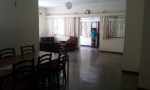
Admittedly, all of this extending made the house somewhat dark. We would have to find ways to brighten it up, add character to the blank canvas and make it feel like ours. It was furnished but also seemed very empty. Our freight would not arrive until November, but we were very fortunate that the Smiths had put quite a few of our boxes into their container, which had just arrived. Piran was thrilled to see his go-kart again!

Having unpacked a little, the Smiths kindly fed us. We were shattered, from the overnight journey and from all that we were taking in. That night we slept. Very well.

The next day we had the issue of staff to sort. Staff? Yes, it was expected for us to employ a housekeeper and gardener; someone had put us in contact with two people who they thought would be suitable. The whole thing was anathema to me, and Steve for that matter; he had never had staff in Botswana and I had only employed a cleaner twice in my life before (a few hours a week when I lived in Cambodia and once a week for the last two years in Cheltenham). Seeing our park-sized garden, it made sense to keep Francis on, who had been tending this beautiful space for the past few years.

Then we turned to the housekeeper vacancy. To interview this grown man in our home with a view to him working for us full-time seemed very odd indeed. My first mistake was to introduce myself as ‘Claire-Lise’. It It was explained to me that Jeffrey would only ever call me, ‘Madame’, which again felt very uncomfortable. He was clearly very nervous to meet us and was keen to make a good impression; his livelihood depended upon this. He had been employed by expatriates for the past two decades at least and had many skills: washing, ironing, cleaning, cooking, even driving! Surely, we would be fools not to employ him. Until we arrived at the house, I had not grasped that there was another small house in the gardens behind our house: staff quarters – another alien concept to us. But when you are new to a place and really haven’t yet grasped all that this place is, you simply find yourself taking your lead from those around you; those for whom all this has become the norm, their way of life. And so it was that we employed Jeffrey and he moved in to our staff quarters.


What a fantastic decision that was; he has transformed our family life for the past three years. Five days a week he discretely and quietly busies himself, making sure everything is exactly as it should be. Washing is ironed and returned to wardrobes; fruit and vegetables are negotiated at the market then prepared with home-made dishes every lunchtime; mosquito nets and curtains are washed on rotation; a babysitter is available on tap, even at short notice. At times I’ve felt guilty for having Jeffrey doing all this for us, but then this is how many economies function; those in paid employment employ others, thus more people are earning a living. Is Jeffrey unhappy? I don’t believe so. He is able to support his family. Last year he built his Mum a new house (for under £150). At the end of the day, this is not England; it is Malawi. Life is indeed very different here and that is why we had made this monumental, 5,000 mile move.
 

What on earth have we done?

FB_IMG_1522678565494

The run up to the August day we set off for Heathrow Airport was so impossibly hectic, I’m not sure if I had given much thought to what we were moving to. What we were moving from had been all-consuming for those past few months since Steve was offered the job.

I felt like I had done little except packing since Easter: we had packed the boxes to be shipped to Malawi; we had packed the boxes to go into storage for two years; we had done at least ten trips to the Sue Ryder shop with car loads of baby, toddler and domestic items we no longer needed; we had sold most of our furniture on Gumtree and passed family heirlooms to relatives for safekeeping. We were organising our ‘new life’ while still keeping up the rapid pace of our ‘old life’: two full-time jobs, the children’s school lives plus clubs, I was still on the crêche rota at St Mark’s and we wanted to spend time with Mum while we were still around the corner. There were also friends we needed to see before we left.

Piran was struggling to process what was about to happen. He became angry frequently and even ran away once at a very crowded Science Festival. In church one time he exhibited his frustration by tipping out all the percussion instruments from their box and threatening the other children with his nerf gun. Don’t even mention the vaccination appointments with the nurse! Piran was so adamant that he wasn’t having the second round of injections that he refused to get out of the car, pulling on my hair and clinging to the safety belt. Once physically manoeuvred inside the surgery, after kicking the nurse, he ran down the corridor, through the waiting area, tipping over tables and toys as he went, screaming, “And I’m NOT moving to Africa!” For a short period of his life, he was hard work. He fought us at every turn. Why? Because we were making him leave all that he knew and loved and was too little to grasp why. Izzy had the same anxieties, but she was old enough to comprehend how this experience could enhance her life, rather than limit it. Piran did not.

My penultimate month at Winchcombe, right in the throes of packing, sorting and sending documentation out to Malawi, we received ‘the call’ at school – a two-day inspection from the following day – an inspection where we were desperately hoping to lift the school from ‘requires improvement’ to ‘good’. And I seemed to have been selected to attend a good number of the meetings with the Ofsted inspectors. It was a high octane week and it would be fair to say my stress levels were very high. Thankfully that time we felt we were able to show off our school as we knew it to be. And the outcome was a reward for all our hard work: Good, with significant outstanding areas. Phew – it had gone well and that was one less stressful thing to face before departure.

Once term ended and we had said goodbye to our four schools, we sold both cars. Not to mention the small issue of trying unsuccessfully to let our beloved Edwardian home. Exactly one week before our departure date we finally had an offer to rent, fully furnished, at the asking price, just as we’d taken the drastic decision to put the house on the market. On that last Monday in the UK we were offered 85% of the asking price to buy (empty of course) and the removal company was due at 9 the next morning! We had one evening to make that momentous decision: to let or to sell? We sold. But none of these decisions seemed so momentous, next to the big one we had already made.

On the Friday we flew!

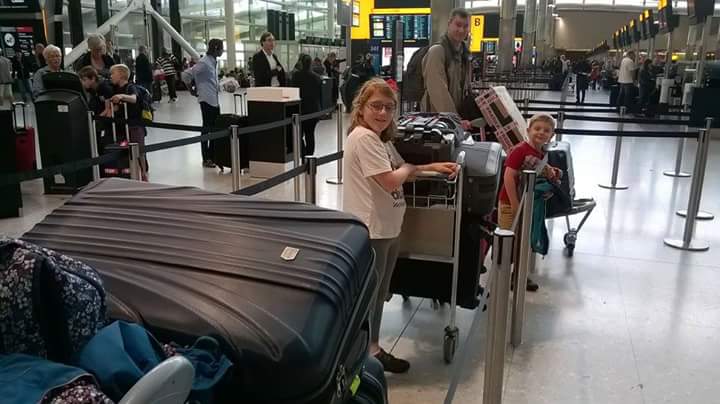
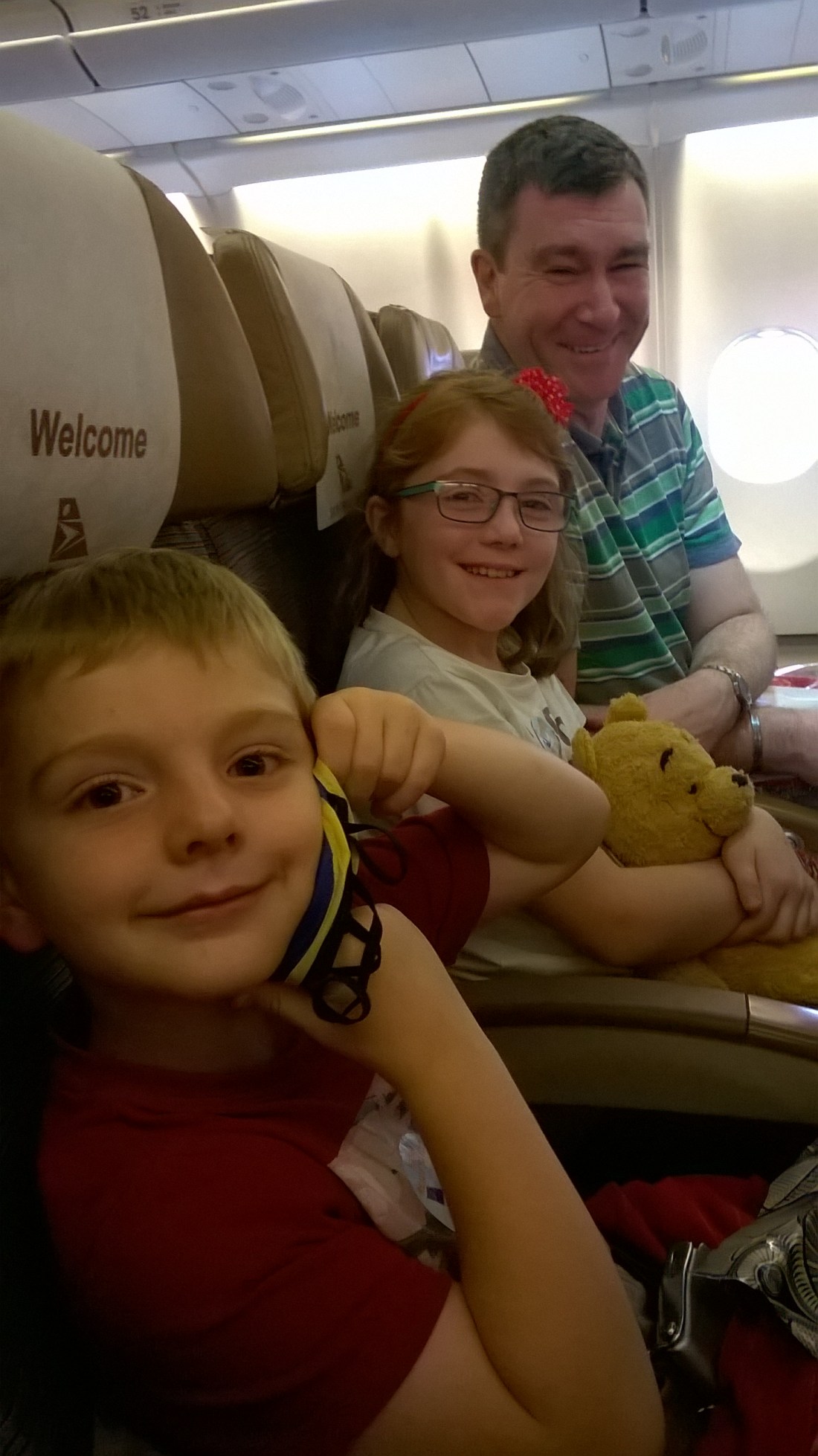
It wasn’t until we got on that plane to Johannesburg that we actually exhaled. This was it: we were really moving to Africa. 8 suitcases in the hold, two expectant children sitting between us, we’d actually made it to the plane. So many years of talking about moving overseas, we’d taken the plunge. After tearful farewells and, for me, many days of wishing we had made a different decision, there was now no going back.

You know that feeling when you get on a roller-coaster and the safety harness clicks into place? A rush of adrenalin flows through your veins and you anticipate the thrill of the ride… you know there will be sudden plummets where everything in you wishes you had stood to the side and watched as the ride whizzed by…but it’s too late. You’ve committed to the course and acceptance is your only recourse. Well, it felt like that.

From the glint in Steve’s tired eyes, I could see no regrets, no fears, barely any apprehension even. I had plenty for both of us. And I was dealing with the kids’ nerves. ‘Africa’ had come to mean so many things in my conversations with Izzy and Piran. ‘Malawi’ had taken on an identity of its own – some borrowed from guide books and Google, but mainly the invention of our imaginations. We had more questions than answers: this is always the hardest part of change – you know exactly what you are leaving behind and little of what you are moving to, and in our case, we had never even been there;

Kieron had sent us some photos of our house, so we did have an idea what it would be like, but you don’t really know until you’re in a place, do you? I was less worried about meeting Malawian people: I love people, all people. And I had lived for a year in Belleville, one of the most multicultural arrondissements of Paris, where I had made many African French friends. People are people; they live, they love, they lose, they learn. But what about day-to-day life, Blantyre’s surroundings, the country of Malawi itself?

WP_20150814_014

FB_IMG_1522678570183

As the plane inched north from Johannesburg, over the Drakensberg Mountains, then Mozambique towards Southern Malawi, I could not have been more surprised by the landscape opening up beneath me. The city gave way to countryside. Countryside gave way to rolling hills, which in turn gave way to mountains. And as my eyes tried to absorb all I could see out of the plane window, I was amazed how green it appeared. No scorched earth. No desert scenes. But instead, peaks and rivers. So much to be explored…

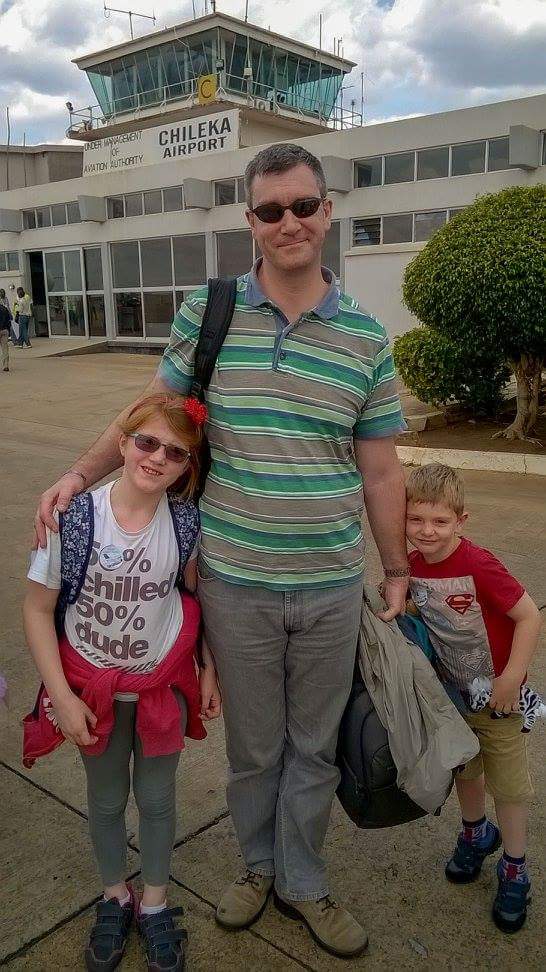
As we began our descent we began to make out villages, communities, the edge of the city, surrounded by hills and mountains. Then the terminal of Chileka Airport was there below us: small, basic and looking very dated. But this was it – we were really here! We stepped off the plane straight onto the tarmac (no airport buses or air-conditioned corridors). And it was very warm, but not unbearably hot. We paused for a photo…our family on Malawian soil for the first time…the adventure had begun.

FB_IMG_1522678577715

Should we stay, or should we go?

After Libby’s death we had begun to speak again of the things we’d dreamed of doing when we first began dating (we had not dared to dream a lot during the following ten years). We had both travelled before we met and both longed to travel again; to visit new and exotic places; to meet fascinating and inspiring people. Now we had the added incentive, that the children were sounding very ‘Gloucestershire’ and their experiences of life beyond felt somewhat smaller than we’d hoped. I began to look at the international adverts in TES (Steve was too busy to give it much thought).

downloadfile

Then in the new year we took a day trip to Cardiff, where Piran bought a small globe ball. We sat opposite each other on the train home and I asked Steve as I threw the ball, “So, if you were to go and teach anywhere in the world, where would you go?” Steve didn’t take long to find the spot on the ball and circle it with his finger, “Anywhere here:” Southern Africa. He passed it back across the table to me, “How about you?” “Anywhere except here,” I responded: Southern Africa. Perhaps another reason to stay in England would be never agreeing on a new destination!

The gamechanger came through Kieron, my Deputy Head, deciding to return to St Andrew’s High School, where he had previously taught Maths, but this time he was appointed Head Teacher. He was heading out to Malawi later that year and he seemed so excited about the possibilities that might unfold there. So when St Andrew’s advertised an Assistant Headship that looked suitable for Steve, the question was obvious: should he apply? It was exactly the part of the world Steve wanted to return to and we would have the added advantage of knowing the Head. In any case, the post was advertised globally, so even if Steve applied, there was a good chance he would not get the job. And we had the huge hurdle to face, of breaking even the faint idea to Mum that we were considering taking her beloved grandchildren 5000 miles away for two whole years; that was beyond agonising – it felt like the cruellest thing I could conceive to do – we had to give this some serious thought.

On the morning of the interview at the Malawi High Commission in London, I found Steve sitting on the sofa in his best suit, looking rather ill, pondering not even going to the interview. This was huge. This would turn things upside-down for our little family. Could he take that responsibility? Wouldn’t it be better to pull out now? Steve’s track record at securing jobs is close to 95%, so I think he feared, not ‘not being offered the job’, but ‘being offered the job’! I found him in a state of high tension and took away his choice, “Get on that train and do the interview.” If he pulled out now, the choice was made for us. If he got to the interview, it bought us a few more days of thinking time.

We had so many questions flying around in our heads;

• Will Malawi be flat and barren like Steve’s photos of Botswana?

• What if it’s too hot and I can’t cope?

• Will it be dry and arid?

• Will they have Haribo? Chocolate?

• Will the supermarkets sell anything that we recognise?

• If it’s the poorest country on earth, will people resent us?

• Does the Internet work there? What if I can’t Skype my Mum?

• Will there be snakes and spiders?

• What if it was a huge mistake and we would wish we had never gone?

They felt like very long days of waiting. Days in which we contacted, emailed and talked to every single person we could think of who could offer advice or wisdom: Libby’s friend who had lived in Malawi; close friends who had moved to Tanzania when their girls were the same age as our two; my other sisters; our friends close by and those far away; anyone and everyone.

Three days later the call came; he was offered the job. And he accepted.


Are we making this count?

FB_20151113_08_30_01_Saved_PictureMy second sister, Libby, had always been such an inspiration to me, ten years her junior – she was one to look up to, to seek advice from and to adore. She had always welcomed my massages when she was tense, like the morning of her wedding day, when she woke up, a ball of nerves. Her expectations of life and of herself were always so high, that tension in her shoulders was inevitable. Following a full body massage, she put on the unique, golden wedding dress she had designed herself. She looked resplendent and the day was as perfect as she had dared to hope, “I want sunshine with some clouds – enough to make the shadows on the Dales atmospheric.” And on the drive to Fountains Abbey for the reception, that is exactly what she got!

And yet now I found myself pushing her in a wheelchair to the dark and sterile room of a hospice…the architect and creator of all things beautiful, the one who envisaged the perfection that nobody else would dream up, who designed spaces with wellbeing in mind…now in a place of bewilderment. In 2012 Libby had become ill. She was diagnosed with cancer and she fought it so courageously, through aggressive liver and bowel surgery, a hysterectomy and chemo, whilst trying to maintain her research and teaching role as Professor at Warwick University. In February 2013 we believed her to be cancer-free, but then a scan in October found the cancer to be back and to be everywhere.

I can’t really describe what those next months were like, as we saw the cancer spreading, causing more pain, and limiting the good things that Libby was able to do. She had begun a course of chemo to delay what was becoming inevitable and the effects of the chemo on Libby were far worse than the cancer itself. Her three children had already been so strong through the illness, so ‘together’. This gave Libby strength (alongside the plethora of research she had found), knowing that the children would be fine; she had done already the important groundwork of helping them know who they are, establishing their values and letting them know how proud she and Bart were of them.

And then came a bigger test that autumn. One day as Libby was taxiing the children in her beloved Fiat 500, she became snappy with the three of them. She was more irritable than normal. Tadhg, her 14-year-old son, said, “Mum, is this the cancer or the chemo?” She answered him, “It’s the chemo.” And he made an instant choice, “Then you must stop, Mum.“ He knew, and so did his sisters, that they would rather have less time with their mum but that time be quality. At their young age, she had already made them wise.

In August 2014 Libby needed a surgical procedure, to reduce the pain. The procedure had not just numbed the pain; it had paralysed her – she had lost her independence. She was already struggling to retain dignity with a colostomy bag. Now she was facing new decisions about the rest of her care; in those days she realised that the quality of her surroundings was more important than instant access to a medical team. And so, she chose to go home to live downstairs, in her tasteful home, that she had so stylishly restored to its former glory. She chose to be surrounded by all the beautiful things she had chosen so painstakingly. She chose to end her days surrounded by her family. She chose to live well to the end.

Those months saw our mum become her carer. 24/7 Mum was in their home, supporting Bart in looking after Libby and ensuring the children had clean clothes, got to school each morning and ate each evening. There was nothing Mum would not do for her; as she had cared for her every need as a baby, so she did once again for her ‘big girl’, now 47. The quiet service Mum undertook in those final months, displayed our mother in a new light and I don’t think any of us have viewed her in the same way since.

Most Saturdays, Steve and I would drive over to Leamington with the children; yes, to visit Libby (but she was no longer up to visitors for more than a few minutes), but mainly to give Mum some reprieve (like Lois’ Tuesday and Friday visits to cook dinner and spend time with the children and the weekends when Julia and Helen came down). It was a majestic autumn that year and I do hold happy memories of hours in the park together. Mum forgot the unspeakable anguish inside those walls and for a few moments held hands with her grandchildren, pushed them on a swing or laughed with them as they played, basking in the autumnal sun. And we had to ‘be’ in that moment. Together. Just there. The soul of a mother cannot bear the torment of impending and inevitable loss every moment of every day. It is too much. There have to be pockets of joy. There have to be.

As winter drew in and November came, we longed for the end, for the anguish to be, not over for us, but over for her. Gosh, why are we all such fighters? Sometimes I wish we’d just give in some of the time! But we are resilient, us Burtons, we don’t know how to not fight.

On the 12th in the afternoon, Mum was in the lounge with Tadhg and Libby, asleep. Mum was stroking her cheek and talking to her. She got up to finish her coffee and Tadhg said, “I think I’ll do what you were doing, Grandma,” and began stroking his mum’s cheek. Two or three minutes later he looked up and said, very calmly, “Grandma, I think that’s it.” And she had, so quietly, departed this mortal coil. Tadhg and his Grandma held each other, beside her in a prayer, and there was only peace in that moment. A prayer of love and of peace.

Tadhg & Libby

And as the weeks of grief passed for Steve and I, a thought kept returning, “Are we making this count?” Is our life worthy of the years we are blessed to have left – together and with our children? Is this life worthy of her? Would she wish our lives fuller or happier? As I read and re-read her blog posts, and watched and re-watched her legacy lecture, I knew deep down that she wished for us…something more.

https://www.youtube.com/watch?v=SzyPsg0RoyU

https://libbysheehan.wordpress.com/