
As we drove from the airport to SAIntS, even in our weary state, we tried to absorb everything we saw along the road. We were immediately struck by the volume of people walking at the sides of the road. Some were carrying things to sell; mops, bananas, phone credit and even puppies. Others were balancing buckets of water or baskets of fruit expertly on their heads – a first African stereotype that was proving to be true. A more surprising sight for us was the first police road block; police with rifles standing beside an old oil drum at the side of the road, checking the passing cars. This time we did not have to stop. And all the way from the airport to the school in the Nyambadwe area of town, we had hills and mountains on both sides; first Michiru mountain to our right – impressive and imposing; then Ndirande mountain to our left – such a distinctive shape with its two humps and the masts on top.
Just as we were taking in these mountainous sights, the car indicated left opposite a Puma garage and turned into a small drive. A sign read, “Welcome to St Andrew’s International High School”. We had heard so much about St Andrew’s; now we were actually here. The campus seemed very leafy, with green trees and flowers everywhere. The road became a dirt track as we turned the corner and the guard let us through the main gates, down the hill, past many well-established trees and to our metal gates. We had pulled up in front of a red brick bungalow, situated in a large garden with many pretty flower beds; this was a well-tended green space – no wonder we had been warned we would need a full-time gardener! There were bamboo, palm trees, papaya, avocado, mango and many other fruit trees. And the birds…wow, immediately these sounds were not European; these were most definitely African birds, making exotic noises I had never heard before.


Taking our bags inside the house, we were pleasantly surprised. If you ask the average English person, who has never visited an African country, to imagine a home in Africa, what would they envisage? Like me, you probably would not have any idea what to expect. What welcomed us was a circa 1960s white-walled, polished concrete-floored, one-storey house with three original bedrooms, a corridor with a bathroom and a toilet, a large open-plan lounge and dining area, a small kitchen with pantry and utility room and multiple extensions. Previous tenants had closed in the ‘khonde’ (Malawian word for patio)…twice, giving us two unidentified rooms between the lounge and our current ‘khonde’. The previous tenants had kindly built an extension onto the back of the house, with a guest bedroom and en suite to the master bedroom – we are very grateful indeed for this.

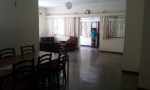
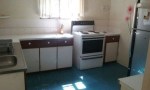
Admittedly, all of this extending made the house somewhat dark. We would have to find ways to brighten it up, add character to the blank canvas and make it feel like ours. It was furnished but also seemed very empty. Our freight would not arrive until November, but we were very fortunate that the Smiths had put quite a few of our boxes into their container, which had just arrived. Piran was thrilled to see his go-kart again!
Having unpacked a little, the Smiths kindly fed us. We were shattered, from the overnight journey and from all that we were taking in. That night we slept. Very well.
The next day we had the issue of staff to sort. Staff? Yes, it was expected for us to employ a housekeeper and gardener; someone had put us in contact with two people who they thought would be suitable. The whole thing was anathema to me, and Steve for that matter; he had never had staff in Botswana and I had only employed a cleaner twice in my life before (a few hours a week when I lived in Cambodia and once a week for the last two years in Cheltenham). Seeing our park-sized garden, it made sense to keep Francis on, who had been tending this beautiful space for the past few years.
Then we turned to the housekeeper vacancy. To interview this grown man in our home with a view to him working for us full-time seemed very odd indeed. My first mistake was to introduce myself as ‘Claire-Lise’. It It was explained to me that Jeffrey would only ever call me, ‘Madame’, which again felt very uncomfortable. He was clearly very nervous to meet us and was keen to make a good impression; his livelihood depended upon this. He had been employed by expatriates for the past two decades at least and had many skills: washing, ironing, cleaning, cooking, even driving! Surely, we would be fools not to employ him. Until we arrived at the house, I had not grasped that there was another small house in the gardens behind our house: staff quarters – another alien concept to us. But when you are new to a place and really haven’t yet grasped all that this place is, you simply find yourself taking your lead from those around you; those for whom all this has become the norm, their way of life. And so it was that we employed Jeffrey and he moved in to our staff quarters.
What a fantastic decision that was; he has transformed our family life for the past three years. Five days a week he discretely and quietly busies himself, making sure everything is exactly as it should be. Washing is ironed and returned to wardrobes; fruit and vegetables are negotiated at the market then prepared with home-made dishes every lunchtime; mosquito nets and curtains are washed on rotation; a babysitter is available on tap, even at short notice. At times I’ve felt guilty for having Jeffrey doing all this for us, but then this is how many economies function; those in paid employment employ others, thus more people are earning a living. Is Jeffrey unhappy? I don’t believe so. He is able to support his family. Last year he built his Mum a new house (for under £150). At the end of the day, this is not England; it is Malawi. Life is indeed very different here and that is why we had made this monumental, 5,000 mile move.
 Out of Africa: Yorkshire adventure