Why am I so homesick now?

This autumn I’m finding I’m sorely missing the crisp leaves underfoot and the bright blue skies of days, before the nights draw in. I’m missing the familiar smells emanating from a bakery and the tantalising tastes of my favourite foods. I am longing for fresh salmon, a variety of real cheese, vanilla slices, confectionery I can afford, Cadbury’s chocolate that tastes like Cadbury’s chocolate and most of all, bread: proper, crispy on the outside – springy on the inside, fresh bread. And naturally, I’ve already begun to dream about the next time I can tuck into Yorkshire fish and chips and mushy peas (with a pint of real ale on the side).

I want to walk through Marks and Spencers, Next and Tescos and feel like I’m ‘back’. I want to turn the TV on without needing online tools and VPNs and things I just don’t understand.

Of course, I mainly want to sit and chat with sisters, my brother, my Mum and old friends too; that goes without saying.

But why this year? Why am I feeling homesick right now? In our 4th year in Malawi, shouldn’t this feel like home? I guess in many ways it does: it’s a dichotomy. This week I was putting flight dates into my phone calendar and I found myself typing, ‘8th – fly home’ (UK) and then, ‘4th – fly home’ (Malawi). Does that even make any sense?! We’ve always said, “Home is where we are” and I have regularly referred to, ‘going home’ when ‘home’ is a pitch where we happen to have put our tent for 2 nights! It is perfectly plausible for more than one place to feel like home. But right now this ‘home’ is not feeling so much like home.

And I’m trying to figure out why.

We still love Malawi and the Malawian and non-Malawian friends we have made here. We are passionate about the amazing school where we work. The children are still happy (most of the time). We have a stunning garden, full of exquisite exotic birds. And then there are the holidays…
…we have just returned from a week staying at a Castle on the shores of Lake Malawi. It was simply idyllic; every moment I was conscious how blessed we were to be there.

And yet, right here, sitting on my bed, I could cry. I miss England and all the things and people it represents. I know it’s not an ideal time in England – I do read British news, but still, it’s the land where I was raised and where so many people I love, live.
Tonight in particular, this sadness somewhere inside me was triggered by a series of insignificant things. But you know, the older I get, the more significant those little things become (perhaps it is a returning to childhood, as we age). I came in from school after 5, then helping Piran with his homework took an hour and a half. I got some sandwich things from the fridge for tea and found the £6 cheese had been left without cling film and had gone mouldy. The butter (that costs £5.50 a block) had been similarly left open. Now this is going to sound so selfish and ungrateful that I’m almost embarrassed to type it, but there are down sides to having staff in your home…one is that you don’t find things as or where you left them. Another is that you rarely have the house ‘to yourselves’…you know? Anyway, then came the final straw: I put ice in a glass, took out a perfect little lime and was about to pour the gin, when I realised we don’t have any tonic!!! This is such an expat stereotype. I have become an expat stereotype! Do I need to escape before things get any worse?
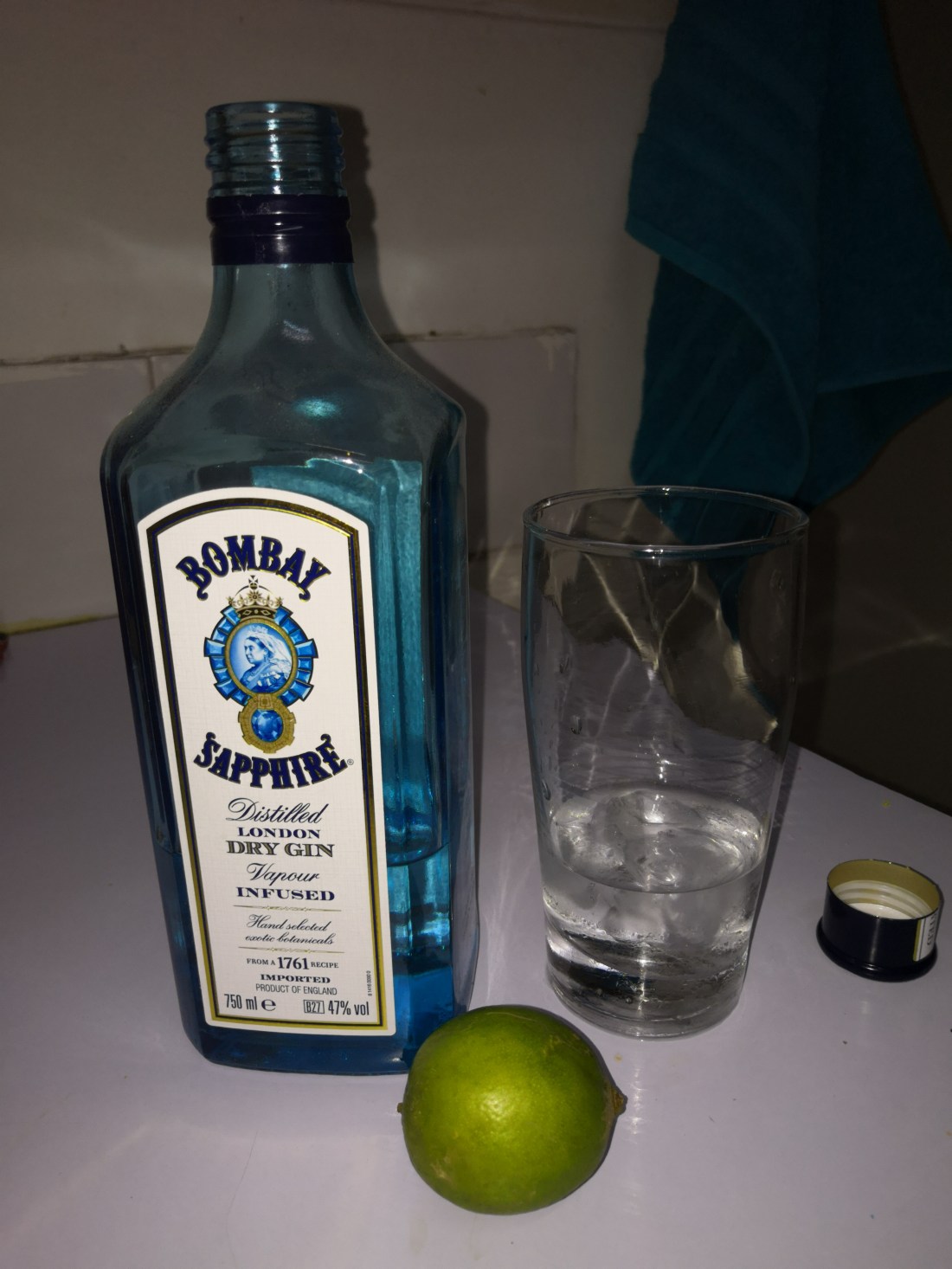
But seriously, I’ve had days like this before. Plenty of them. Worse days in fact. Days with no water, no power, no Wi-Fi. Days stuck at Road Traffic (the most depressing place in all Malawi, if not the world). Days stuck at Immigration and the National Register Office. Not to mention my absolute worst day ever in Malawi (that’s for another blog post). But none of those days made me yearn for home as I have begun to now.

I am not looking for sympathy – heaven knows, I know how fortunate we are to live this dream (mind you, if you’ve ever looked at my photos and felt a pang of jealousy, then maybe this post will help you see the other side of what life out here entails). I just felt the need to write this down and it has been a long time since I felt like writing things down. 3 months in fact, and it just so happens that 3 separate people have asked me lately to blog again…so here I am, being me. After all, that’s all I know how to be. C-L. Love me or hate me, you all see the same me. Only ever always real. And reality tonight is that I’m feeling homesick and I want to go home. Maybe not right now. Maybe not forever. But home is calling me, that’s for sure.

Can this be my man?

Dad & P

Within days, if not hours, of arriving in Malawi a new style Steve began to reveal himself to the children and I.

We had become accustomed to the man in our lives being rather grumpy, preoccupied and irritable. We were used to him seeming tired…all the time. We knew it wasn’t his fault. He couldn’t help it when his drive home from school took an hour or more. He couldn’t help it when he had yet more recruitment issues in his faculty and he didn’t know who would be standing in front of his classes the next day. He couldn’t help it when he had to bring in more monitoring strategies; when he knew he would look like the bad guy and he desperately didn’t want to. I’m sure most of his colleagues knew that he is a genuinely nice person, but he had been cornered into this policing role that definitely did not suit him – his character or his leadership style.

The more uncomfortable he felt at work, the more work sucked the vitality out of him and ballooned to fill every space in his mind, whether at work or at home.

I was sympathetic to Steve’s situation; as a teacher myself I knew what was happening in our schools and I understood implicitly the horrendous circumstances that had not given him a good first year in the job:

In September Steve started at his new school.

In October we lost his Mam to cancer.

And Steve’s second in department went on maternity leave.

In November I had Ofsted.

In December (the following week) we moved house.

In February I had Piran.

In March Steve’s Dad was diagnosed with cancer.

In April our house was burgled.

In July and August we spent every available day with Steve’s Dad in Northumberland, mostly in hospital.

In September we lost him.

To that backdrop, how is anyone meant to make their mark as a leader in Sciences with 16 members of staff? Or improve the performance of students across qualifications? Or complete all the necessary administration and exam entries? Or plan lessons and mark books? Or stay awake on the lengthy commute? Or even…drag yourself out of bed every morning and go to work? He didn’t take a single day off sick. Not one.

For all this and so much more, we admired and adored him: me, my husband; Izzy and Piran their Daddy. He never became less important to us, but at times his arrival home brought with him a dark cloud, that overshadowed us all. Our family life had lost its joy.

I am not saying that for 5 years our life was joyless – of course not. Have you met our children? Or me? There was plenty of joy and laughter, but there was much more during school holidays than term time! We still saw friends and visited family. We still played games and watched funny things on TV. And we went for walks in the countryside and took the kids to the park. But fun seemed to take a lot of effort.

Now, in Malawi, the same family unit of four, it appeared that more had changed than our location. Steve was at ease, relaxed, smiling even. He seemed truly happy. When we went anywhere, it would be Steve, not me, greeting people. He would explain to me the importance of greetings in this part of Africa. It’s not OK to launch in to what you are looking for or what you need, without first saying hello and asking after the person’s health, and possibly their family’s health. Once that is done, and only then, can you go on to where you would begin in England. Steve was familiar with this process from his time in Botswana and he enjoyed it. No longer reticent to start a conversation or embark on chitchat, he was making the first social moves (and would later negotiate calmly at border crossings) and causing me to stand speechless with surprise beside him!

But I like this new Steve. I like his calm demeanour. I like the glint in his eye. I like to see him joking with the children. And I like the attention we are now used to. Somehow (I’m not sure how this works), this enchanting land of wonderful wildlife and acacia trees, of huge skies and red sunsets, has made my husband feel that he belongs, like nowhere else on earth has done. Here he is at one with the landscape and at peace with himself.

Steve Vic Falls

The French have a fabulous word for this, like a blossoming, an opening out, a revelation: un épanouisement.

[On a vécu au Malawi un ëpanouissement énorme dans la famille Harrison.]


What is school like Term 1?

I came across some musings I had written in a journal when we had been here just a few weeks and I’m glad I found them – I honestly cannot remember what our first impressions were; 3 years here have totally influenced how we view our life in Blantyre. This is what I wrote;

“We’ve been here 5 weeks now and it’s flown. The children are settling well at their new school, despite some ‘blips’. They are doing amazingly well, actually.

Steve began his Senior Teacher work almost immediately after landing, but he is enjoying it. What is even better, is seeing his confidence coming back already, with his enjoyment of the new job. I can recognise my ‘Cotswold School’ Steve again; the one I fell in love with over a decade ago; only this time is even better because this is ‘Steve in Africa’ and I have never seen this side to him before. [What’s more, unlike Botswana, Steve is in Malawi with his wife beside him and two happy children running around the garden!] He is starting to believe that he can do a very good job in this role, alongside the others on SLT and the self-esteem eroded by the previous job, is starting to return.

As for me, I am happy here. I enjoy family life, with Jeffrey helping in our home and Francis in our garden. I am doing a little bit of teaching, covering for absent colleagues the first week of term, and now teaching one Year 8 French and one Year 13 Business class (the Deputy Head was short of a teacher in these two departments, the ones I happen to have a degree in!) One 70-minute lesson per day is keeping my mind occupied and my identity as a teacher satisfied – to have a small role outside the home. I had worried that I would experience boredom, coming out here without paid work for the first time in my adult life, but I seem to always be busy (I find that small tasks I expect to complete quickly can take me half a day, or a whole day, or even several days together – everything happens at a slower pace here: there is no rush).

When the children are at school, I am taking an online course in Mindfulness through Monash University and I am finding it very interesting. How to ensure that you are really ‘present’ and aware of each moment? The meditations and exercises in self-compassion are very helpful; as a person who has always had very high expectations of self and others (unreasonably/unhelpfully so), it is really benefiting my psyche and my marriage. The children and I are even finding time to meditate together; we might light a candle, talk about a story or listen to a song, share our thoughts or worries, then pray together – it’s a lovely way to bring family far away into our home, to remember them together in what we are calling our ‘Sacred Space’.

And I am enjoying spending more time with the children and as a family. I have the time to be there for Izzy and Piran, to listen, to play, to just ‘be together’ without so much rushing around. We enjoy campus living; having neighbours we actually see; the children have playmates on tap – they can play without arranging ‘playdates’ days in advance and without any chauffeuring required. The children are all safe within a gated compound where they can walk to friends’ houses alone – it feels like giving them the kind of childhood we enjoyed in 1970s/1980s England.

The children’s new school, Phoenix International Primary School, being international, had children from many different countries. Their classes were small; about half the size of their classes in England. In fact the two schools could hardly be more different! There were contrasts in size and wealth and curriculum (Rowanfield was twice as big with 50% free school mealers and driven to maintain its 3 times Ofsted ‘Outstanding’; Phoenix is fee-paying, smaller and intimate, with the freedom to build the curriculum of its choosing, without inspection) . Phoenix is made up of two halves, called Lower School and Upper School. Each is based around an intimate courtyard, with classrooms coming off and with pillars, plants, play areas and trees all adding character and charm. We were very impressed with the school pool too.

03000865030008a503000af303000c05

As October approached, the incredible Jacaranda came into bloom and filled the school with purple blossoms – breath-taking beauty I had never before beheld. Then to my amazement, as the lilac petals were beginning to fade, they were overlapped by the vibrant, vivid reds of Flame Trees – both a treat to behold. And as we were struck by the warmth of these October colours, so the warmth of new friendships struck us also. Truly, we were living in the ‘Warm Heart of Africa’.


What were our first impressions of Blantyre (Malawi, not Scotland)?

Looking back nearly 3 years, it is difficult to remember our first impressions of Blantyre. The city is concrete grey, with few historical buildings and little ancient charm. The roads are full of cars and lorries that would not pass their MOT back home. On every small trip you pass broken down vehicles, abandoned at a junction or on the highway. Usually instead of red warning triangles, branches are laid in the road.


However, I do remember being pleasantly surprised by our first trip to Chichiri Mall; not that it is a ‘mall’ in the way that most people would understand the word, but the supermarket did have most of the things you would hope for – not cheap, mind, but at least we would be able to get hold of most things. We were taken to two fabulous oases early on: Caffe Grazia and La Caverna @ Mandala House – both serving yummy Italian treats in very scenic surroundings. I had no idea before moving here that there would so many European communities; 4th generation Italian and Greek families.
Similarly, most of the small shops on the main roads (Haile Selassie Avenue, Glyn Jones Road and Victoria Avenue) are run by Indian families; families who have been here for decades; some have come here via the UK and have ties to all three countries. A huge advantage of this for expatriates is the presence of 2 good Indian restaurants in town…we were looking forward to trying them out. It’s hard to describe the little shops in the town centre – they are not always recognisable by the shop name and the eclectic mix of goods inside do not always help decipher the nature of the business. Much of their wares appear to come from China and very few brands are familiar to us. Yet, some of these businesses are invaluable – Citipharm is indispensable to us already and certain goods we could old purchase from Citi Boutique.
A down side of shopping in Blantyre centre is the prevalence of beggars and the ethical dilemmas posed by them. There were beggars on the pavements, beggars by the cars at major junctions and hawkers everywhere trying to sell everything from mops to oranges to sunglasses and car chargers. It seemed there is no limit to the number of times you can say, ‘No, thank you’ in the space between the car and the shop door (I desperately wanted to learn to say these things in Chichewa)!
I say, ‘the car’ and not, ‘our car’ because we did not yet have a car and were busy hunting for the right vehicle. In the meantime, we were dependent on colleagues and neighbours who could squeeze us into their car or lend us their car when they were not using it. It was understandably frustrating not being able to get around under our own steam. I’ve since discovered an amazing taxi driver, who I use whenever our car is with the mechanic – I wish I’d had his number back in 2015! But friends really were very kind and helpful.
I’ve mentioned wanting to learn the language, but it was also amazing to realise that everywhere we went in Blantyre people were perfectly able to communicate with us in English; Malawi really does have a very high standard of English and comes top 10 in Africa every year for the quality of English spoken. We felt very lucky in that regard.
On my second Sunday here, I got the chance to climb Ndirande mountain with some of the SAIntS teachers. We set off early to avoid the midday sun. It was a great morning; partly because I got to know some lovely colleagues better; partly because I always think that climbing a mountain helps you to orientate. There is no better way to gain perspective than seeing the landscape change and the city below become smaller as you climb. There were a few tricky rocks to clamber over (with help from a young DT teacher) but the view from the summit was well worth the effort. And I’ve enjoyed the view of Ndirande from the school all the more for knowing that I have conquered it!

WP_20150816_033
Our final significant experience as part of our orientation was the day trip to Majete National Park; we drove down the escarpment down into the Chikwawa valley, descending around 1000 metres, feeling the sun get hotter as we approached Majete. No sooner than we were through the gates, than we began to see antelope – antelope that feel very familiar to me now but whose names I had never even heard until that eye-opening day in August. We saw little impala, bigger nyala and waterbuck, impressive sable and kudu, along with the ever comical warthog and guinea fowl. The big question on our lips was, “will we see elephant?” We needn’t have worried – down by the Shire (pronounced Shi-ree) river, early in the day, we spotted a family of five elephant, one a baby. I was surprised by my reaction; my eyes filled to see elephant in the wild for the first time – so big, so majestic – I was speechless. That was the first but not the last time elephant have moved me to the core. They really are very special creatures – a wonder to behold. What a privilege!


It would be fair to say that our first impressions were many and varied. Blantyre was many different things at different times, in different places and with different people. We knew already that Malawi held a charm that would captivate us for years to come. There would be struggles along the way, but the benefits already becoming perceptible to us, we felt sure, would make every uphill climb worth its effort.


Will this be our home from home?

As we drove from the airport to SAIntS, even in our weary state, we tried to absorb everything we saw along the road. We were immediately struck by the volume of people walking at the sides of the road. Some were carrying things to sell; mops, bananas, phone credit and even puppies. Others were balancing buckets of water or baskets of fruit expertly on their heads – a first African stereotype that was proving to be true. A more surprising sight for us was the first police road block; police with rifles standing beside an old oil drum at the side of the road, checking the passing cars. This time we did not have to stop. And all the way from the airport to the school in the Nyambadwe area of town, we had hills and mountains on both sides; first Michiru mountain to our right – impressive and imposing; then Ndirande mountain to our left – such a distinctive shape with its two humps and the masts on top.

Just as we were taking in these mountainous sights, the car indicated left opposite a Puma garage and turned into a small drive. A sign read, “Welcome to St Andrew’s International High School”. We had heard so much about St Andrew’s; now we were actually here. The campus seemed very leafy, with green trees and flowers everywhere. The road became a dirt track as we turned the corner and the guard let us through the main gates, down the hill, past many well-established trees and to our metal gates. We had pulled up in front of a red brick bungalow, situated in a large garden with many pretty flower beds; this was a well-tended green space – no wonder we had been warned we would need a full-time gardener! There were bamboo, palm trees, papaya, avocado, mango and many other fruit trees. And the birds…wow, immediately these sounds were not European; these were most definitely African birds, making exotic noises I had never heard before.

Taking our bags inside the house, we were pleasantly surprised. If you ask the average English person, who has never visited an African country, to imagine a home in Africa, what would they envisage? Like me, you probably would not have any idea what to expect. What welcomed us was a circa 1960s white-walled, polished concrete-floored, one-storey house with three original bedrooms, a corridor with a bathroom and a toilet, a large open-plan lounge and dining area, a small kitchen with pantry and utility room and multiple extensions. Previous tenants had closed in the ‘khonde’ (Malawian word for patio)…twice, giving us two unidentified rooms between the lounge and our current ‘khonde’. The previous tenants had kindly built an extension onto the back of the house, with a guest bedroom and en suite to the master bedroom – we are very grateful indeed for this.

Admittedly, all of this extending made the house somewhat dark. We would have to find ways to brighten it up, add character to the blank canvas and make it feel like ours. It was furnished but also seemed very empty. Our freight would not arrive until November, but we were very fortunate that the Smiths had put quite a few of our boxes into their container, which had just arrived. Piran was thrilled to see his go-kart again!

Having unpacked a little, the Smiths kindly fed us. We were shattered, from the overnight journey and from all that we were taking in. That night we slept. Very well.

The next day we had the issue of staff to sort. Staff? Yes, it was expected for us to employ a housekeeper and gardener; someone had put us in contact with two people who they thought would be suitable. The whole thing was anathema to me, and Steve for that matter; he had never had staff in Botswana and I had only employed a cleaner twice in my life before (a few hours a week when I lived in Cambodia and once a week for the last two years in Cheltenham). Seeing our park-sized garden, it made sense to keep Francis on, who had been tending this beautiful space for the past few years.

Then we turned to the housekeeper vacancy. To interview this grown man in our home with a view to him working for us full-time seemed very odd indeed. My first mistake was to introduce myself as ‘Claire-Lise’. It It was explained to me that Jeffrey would only ever call me, ‘Madame’, which again felt very uncomfortable. He was clearly very nervous to meet us and was keen to make a good impression; his livelihood depended upon this. He had been employed by expatriates for the past two decades at least and had many skills: washing, ironing, cleaning, cooking, even driving! Surely, we would be fools not to employ him. Until we arrived at the house, I had not grasped that there was another small house in the gardens behind our house: staff quarters – another alien concept to us. But when you are new to a place and really haven’t yet grasped all that this place is, you simply find yourself taking your lead from those around you; those for whom all this has become the norm, their way of life. And so it was that we employed Jeffrey and he moved in to our staff quarters.


What a fantastic decision that was; he has transformed our family life for the past three years. Five days a week he discretely and quietly busies himself, making sure everything is exactly as it should be. Washing is ironed and returned to wardrobes; fruit and vegetables are negotiated at the market then prepared with home-made dishes every lunchtime; mosquito nets and curtains are washed on rotation; a babysitter is available on tap, even at short notice. At times I’ve felt guilty for having Jeffrey doing all this for us, but then this is how many economies function; those in paid employment employ others, thus more people are earning a living. Is Jeffrey unhappy? I don’t believe so. He is able to support his family. Last year he built his Mum a new house (for under £150). At the end of the day, this is not England; it is Malawi. Life is indeed very different here and that is why we had made this monumental, 5,000 mile move.


What on earth have we done?

FB_IMG_1522678565494

The run up to the August day we set off for Heathrow Airport was so impossibly hectic, I’m not sure if I had given much thought to what we were moving to. What we were moving from had been all-consuming for those past few months since Steve was offered the job.

I felt like I had done little except packing since Easter: we had packed the boxes to be shipped to Malawi; we had packed the boxes to go into storage for two years; we had done at least ten trips to the Sue Ryder shop with car loads of baby, toddler and domestic items we no longer needed; we had sold most of our furniture on Gumtree and passed family heirlooms to relatives for safekeeping. We were organising our ‘new life’ while still keeping up the rapid pace of our ‘old life’: two full-time jobs, the children’s school lives plus clubs, I was still on the crêche rota at St Mark’s and we wanted to spend time with Mum while we were still around the corner. There were also friends we needed to see before we left.

Piran was struggling to process what was about to happen. He became angry frequently and even ran away once at a very crowded Science Festival. In church one time he exhibited his frustration by tipping out all the percussion instruments from their box and threatening the other children with his nerf gun. Don’t even mention the vaccination appointments with the nurse! Piran was so adamant that he wasn’t having the second round of injections that he refused to get out of the car, pulling on my hair and clinging to the safety belt. Once physically manoeuvred inside the surgery, after kicking the nurse, he ran down the corridor, through the waiting area, tipping over tables and toys as he went, screaming, “And I’m NOT moving to Africa!” For a short period of his life, he was hard work. He fought us at every turn. Why? Because we were making him leave all that he knew and loved and was too little to grasp why. Izzy had the same anxieties, but she was old enough to comprehend how this experience could enhance her life, rather than limit it. Piran did not.

My penultimate month at Winchcombe, right in the throes of packing, sorting and sending documentation out to Malawi, we received ‘the call’ at school – a two-day inspection from the following day – an inspection where we were desperately hoping to lift the school from ‘requires improvement’ to ‘good’. And I seemed to have been selected to attend a good number of the meetings with the Ofsted inspectors. It was a high octane week and it would be fair to say my stress levels were very high. Thankfully that time we felt we were able to show off our school as we knew it to be. And the outcome was a reward for all our hard work: Good, with significant outstanding areas. Phew – it had gone well and that was one less stressful thing to face before departure.

Once term ended and we had said goodbye to our four schools, we sold both cars. Not to mention the small issue of trying unsuccessfully to let our beloved Edwardian home. Exactly one week before our departure date we finally had an offer to rent, fully furnished, at the asking price, just as we’d taken the drastic decision to put the house on the market. On that last Monday in the UK we were offered 85% of the asking price to buy (empty of course) and the removal company was due at 9 the next morning! We had one evening to make that momentous decision: to let or to sell? We sold. But none of these decisions seemed so momentous, next to the big one we had already made.

On the Friday we flew!

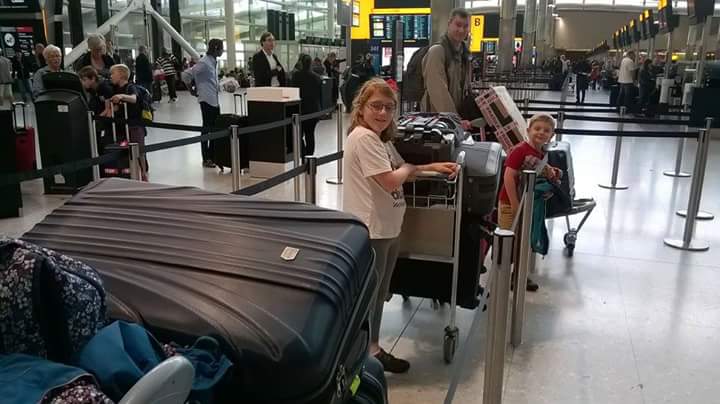
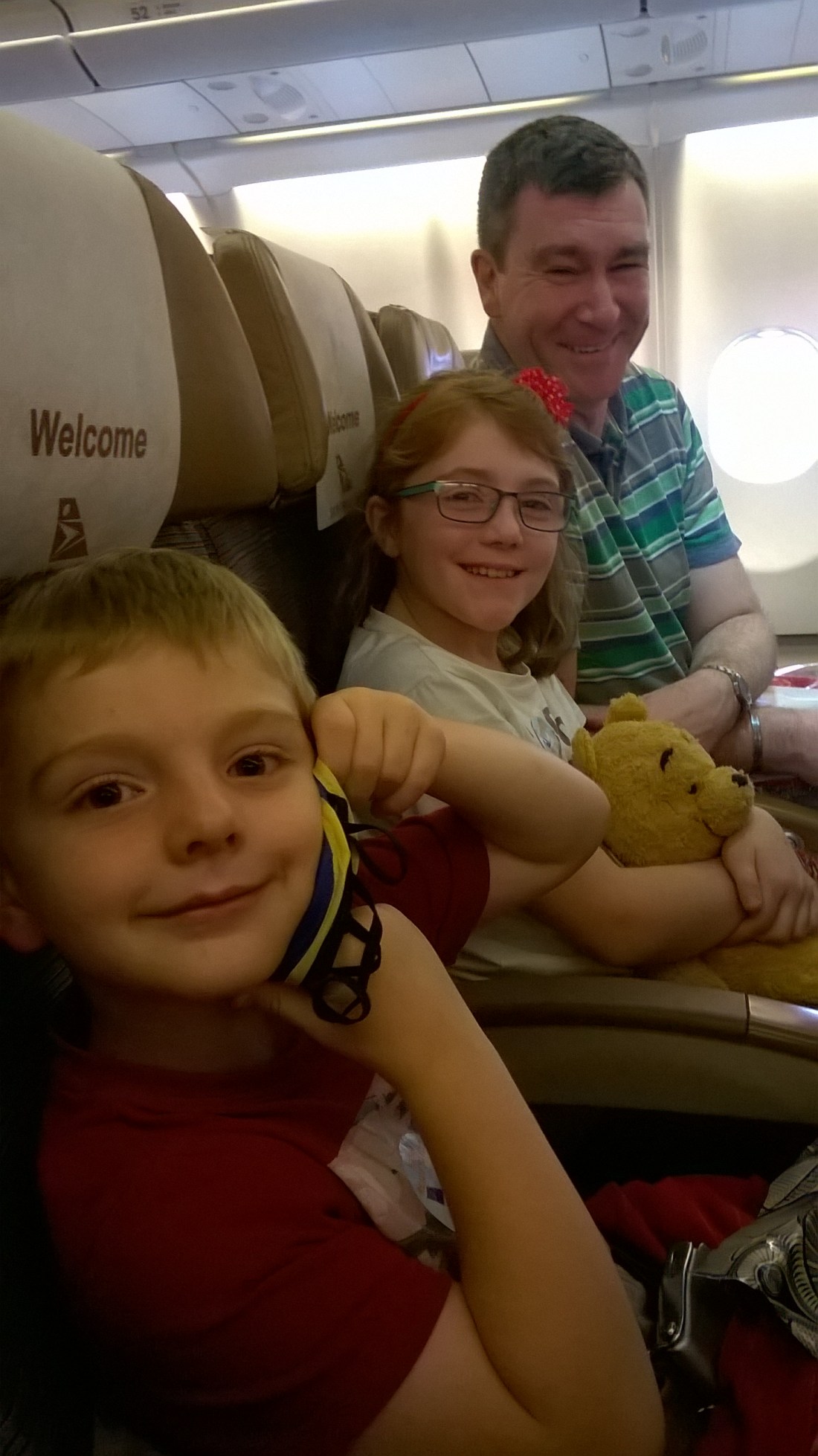
It wasn’t until we got on that plane to Johannesburg that we actually exhaled. This was it: we were really moving to Africa. 8 suitcases in the hold, two expectant children sitting between us, we’d actually made it to the plane. So many years of talking about moving overseas, we’d taken the plunge. After tearful farewells and, for me, many days of wishing we had made a different decision, there was now no going back.

You know that feeling when you get on a roller-coaster and the safety harness clicks into place? A rush of adrenalin flows through your veins and you anticipate the thrill of the ride… you know there will be sudden plummets where everything in you wishes you had stood to the side and watched as the ride whizzed by…but it’s too late. You’ve committed to the course and acceptance is your only recourse. Well, it felt like that.

From the glint in Steve’s tired eyes, I could see no regrets, no fears, barely any apprehension even. I had plenty for both of us. And I was dealing with the kids’ nerves. ‘Africa’ had come to mean so many things in my conversations with Izzy and Piran. ‘Malawi’ had taken on an identity of its own – some borrowed from guide books and Google, but mainly the invention of our imaginations. We had more questions than answers: this is always the hardest part of change – you know exactly what you are leaving behind and little of what you are moving to, and in our case, we had never even been there;

Kieron had sent us some photos of our house, so we did have an idea what it would be like, but you don’t really know until you’re in a place, do you? I was less worried about meeting Malawian people: I love people, all people. And I had lived for a year in Belleville, one of the most multicultural arrondissements of Paris, where I had made many African French friends. People are people; they live, they love, they lose, they learn. But what about day-to-day life, Blantyre’s surroundings, the country of Malawi itself?

WP_20150814_014

FB_IMG_1522678570183

As the plane inched north from Johannesburg, over the Drakensberg Mountains, then Mozambique towards Southern Malawi, I could not have been more surprised by the landscape opening up beneath me. The city gave way to countryside. Countryside gave way to rolling hills, which in turn gave way to mountains. And as my eyes tried to absorb all I could see out of the plane window, I was amazed how green it appeared. No scorched earth. No desert scenes. But instead, peaks and rivers. So much to be explored…

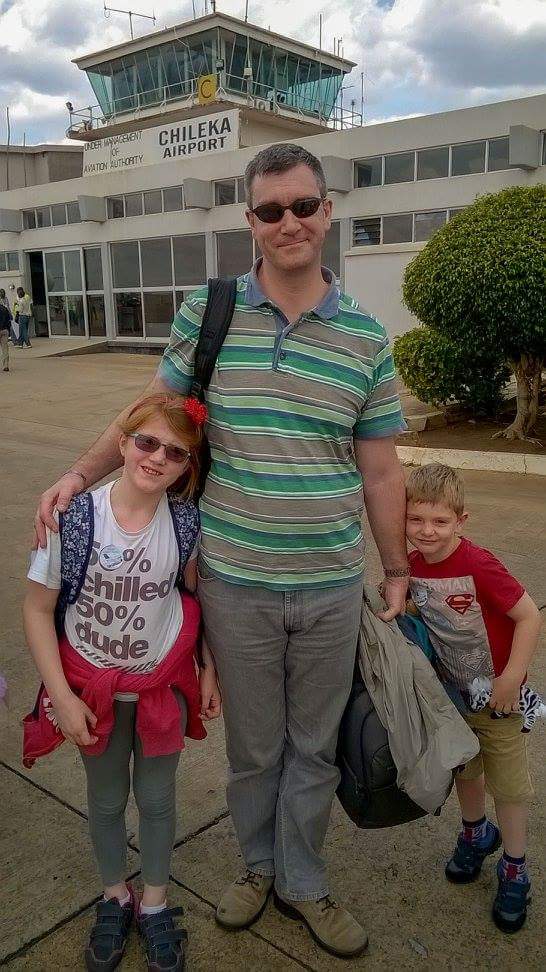
As we began our descent we began to make out villages, communities, the edge of the city, surrounded by hills and mountains. Then the terminal of Chileka Airport was there below us: small, basic and looking very dated. But this was it – we were really here! We stepped off the plane straight onto the tarmac (no airport buses or air-conditioned corridors). And it was very warm, but not unbearably hot. We paused for a photo…our family on Malawian soil for the first time…the adventure had begun.

FB_IMG_1522678577715

Should we stay, or should we go?

After Libby’s death we had begun to speak again of the things we’d dreamed of doing when we first began dating (we had not dared to dream a lot during the following ten years). We had both travelled before we met and both longed to travel again; to visit new and exotic places; to meet fascinating and inspiring people. Now we had the added incentive, that the children were sounding very ‘Gloucestershire’ and their experiences of life beyond felt somewhat smaller than we’d hoped. I began to look at the international adverts in TES (Steve was too busy to give it much thought).

downloadfile

Then in the new year we took a day trip to Cardiff, where Piran bought a small globe ball. We sat opposite each other on the train home and I asked Steve as I threw the ball, “So, if you were to go and teach anywhere in the world, where would you go?” Steve didn’t take long to find the spot on the ball and circle it with his finger, “Anywhere here:” Southern Africa. He passed it back across the table to me, “How about you?” “Anywhere except here,” I responded: Southern Africa. Perhaps another reason to stay in England would be never agreeing on a new destination!

The gamechanger came through Kieron, my Deputy Head, deciding to return to St Andrew’s High School, where he had previously taught Maths, but this time he was appointed Head Teacher. He was heading out to Malawi later that year and he seemed so excited about the possibilities that might unfold there. So when St Andrew’s advertised an Assistant Headship that looked suitable for Steve, the question was obvious: should he apply? It was exactly the part of the world Steve wanted to return to and we would have the added advantage of knowing the Head. In any case, the post was advertised globally, so even if Steve applied, there was a good chance he would not get the job. And we had the huge hurdle to face, of breaking even the faint idea to Mum that we were considering taking her beloved grandchildren 5000 miles away for two whole years; that was beyond agonising – it felt like the cruellest thing I could conceive to do – we had to give this some serious thought.

On the morning of the interview at the Malawi High Commission in London, I found Steve sitting on the sofa in his best suit, looking rather ill, pondering not even going to the interview. This was huge. This would turn things upside-down for our little family. Could he take that responsibility? Wouldn’t it be better to pull out now? Steve’s track record at securing jobs is close to 95%, so I think he feared, not ‘not being offered the job’, but ‘being offered the job’! I found him in a state of high tension and took away his choice, “Get on that train and do the interview.” If he pulled out now, the choice was made for us. If he got to the interview, it bought us a few more days of thinking time.

We had so many questions flying around in our heads;

• Will Malawi be flat and barren like Steve’s photos of Botswana?

• What if it’s too hot and I can’t cope?

• Will it be dry and arid?

• Will they have Haribo? Chocolate?

• Will the supermarkets sell anything that we recognise?

• If it’s the poorest country on earth, will people resent us?

• Does the Internet work there? What if I can’t Skype my Mum?

• Will there be snakes and spiders?

• What if it was a huge mistake and we would wish we had never gone?

They felt like very long days of waiting. Days in which we contacted, emailed and talked to every single person we could think of who could offer advice or wisdom: Libby’s friend who had lived in Malawi; close friends who had moved to Tanzania when their girls were the same age as our two; my other sisters; our friends close by and those far away; anyone and everyone.

Three days later the call came; he was offered the job. And he accepted.


Are we making this count?

FB_20151113_08_30_01_Saved_PictureMy second sister, Libby, had always been such an inspiration to me, ten years her junior – she was one to look up to, to seek advice from and to adore. She had always welcomed my massages when she was tense, like the morning of her wedding day, when she woke up, a ball of nerves. Her expectations of life and of herself were always so high, that tension in her shoulders was inevitable. Following a full body massage, she put on the unique, golden wedding dress she had designed herself. She looked resplendent and the day was as perfect as she had dared to hope, “I want sunshine with some clouds – enough to make the shadows on the Dales atmospheric.” And on the drive to Fountains Abbey for the reception, that is exactly what she got!

And yet now I found myself pushing her in a wheelchair to the dark and sterile room of a hospice…the architect and creator of all things beautiful, the one who envisaged the perfection that nobody else would dream up, who designed spaces with wellbeing in mind…now in a place of bewilderment. In 2012 Libby had become ill. She was diagnosed with cancer and she fought it so courageously, through aggressive liver and bowel surgery, a hysterectomy and chemo, whilst trying to maintain her research and teaching role as Professor at Warwick University. In February 2013 we believed her to be cancer-free, but then a scan in October found the cancer to be back and to be everywhere.

I can’t really describe what those next months were like, as we saw the cancer spreading, causing more pain, and limiting the good things that Libby was able to do. She had begun a course of chemo to delay what was becoming inevitable and the effects of the chemo on Libby were far worse than the cancer itself. Her three children had already been so strong through the illness, so ‘together’. This gave Libby strength (alongside the plethora of research she had found), knowing that the children would be fine; she had done already the important groundwork of helping them know who they are, establishing their values and letting them know how proud she and Bart were of them.

And then came a bigger test that autumn. One day as Libby was taxiing the children in her beloved Fiat 500, she became snappy with the three of them. She was more irritable than normal. Tadhg, her 14-year-old son, said, “Mum, is this the cancer or the chemo?” She answered him, “It’s the chemo.” And he made an instant choice, “Then you must stop, Mum.“ He knew, and so did his sisters, that they would rather have less time with their mum but that time be quality. At their young age, she had already made them wise.

In August 2014 Libby needed a surgical procedure, to reduce the pain. The procedure had not just numbed the pain; it had paralysed her – she had lost her independence. She was already struggling to retain dignity with a colostomy bag. Now she was facing new decisions about the rest of her care; in those days she realised that the quality of her surroundings was more important than instant access to a medical team. And so, she chose to go home to live downstairs, in her tasteful home, that she had so stylishly restored to its former glory. She chose to be surrounded by all the beautiful things she had chosen so painstakingly. She chose to end her days surrounded by her family. She chose to live well to the end.

Those months saw our mum become her carer. 24/7 Mum was in their home, supporting Bart in looking after Libby and ensuring the children had clean clothes, got to school each morning and ate each evening. There was nothing Mum would not do for her; as she had cared for her every need as a baby, so she did once again for her ‘big girl’, now 47. The quiet service Mum undertook in those final months, displayed our mother in a new light and I don’t think any of us have viewed her in the same way since.

Most Saturdays, Steve and I would drive over to Leamington with the children; yes, to visit Libby (but she was no longer up to visitors for more than a few minutes), but mainly to give Mum some reprieve (like Lois’ Tuesday and Friday visits to cook dinner and spend time with the children and the weekends when Julia and Helen came down). It was a majestic autumn that year and I do hold happy memories of hours in the park together. Mum forgot the unspeakable anguish inside those walls and for a few moments held hands with her grandchildren, pushed them on a swing or laughed with them as they played, basking in the autumnal sun. And we had to ‘be’ in that moment. Together. Just there. The soul of a mother cannot bear the torment of impending and inevitable loss every moment of every day. It is too much. There have to be pockets of joy. There have to be.

As winter drew in and November came, we longed for the end, for the anguish to be, not over for us, but over for her. Gosh, why are we all such fighters? Sometimes I wish we’d just give in some of the time! But we are resilient, us Burtons, we don’t know how to not fight.

On the 12th in the afternoon, Mum was in the lounge with Tadhg and Libby, asleep. Mum was stroking her cheek and talking to her. She got up to finish her coffee and Tadhg said, “I think I’ll do what you were doing, Grandma,” and began stroking his mum’s cheek. Two or three minutes later he looked up and said, very calmly, “Grandma, I think that’s it.” And she had, so quietly, departed this mortal coil. Tadhg and his Grandma held each other, beside her in a prayer, and there was only peace in that moment. A prayer of love and of peace.

Tadhg & Libby

And as the weeks of grief passed for Steve and I, a thought kept returning, “Are we making this count?” Is our life worthy of the years we are blessed to have left – together and with our children? Is this life worthy of her? Would she wish our lives fuller or happier? As I read and re-read her blog posts, and watched and re-watched her legacy lecture, I knew deep down that she wished for us…something more.

https://www.youtube.com/watch?v=SzyPsg0RoyU

https://libbysheehan.wordpress.com/


Is this the perfect life?


yellowdoor

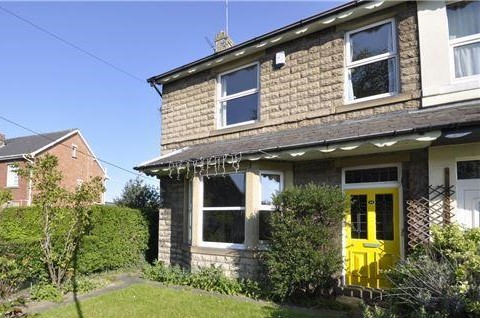
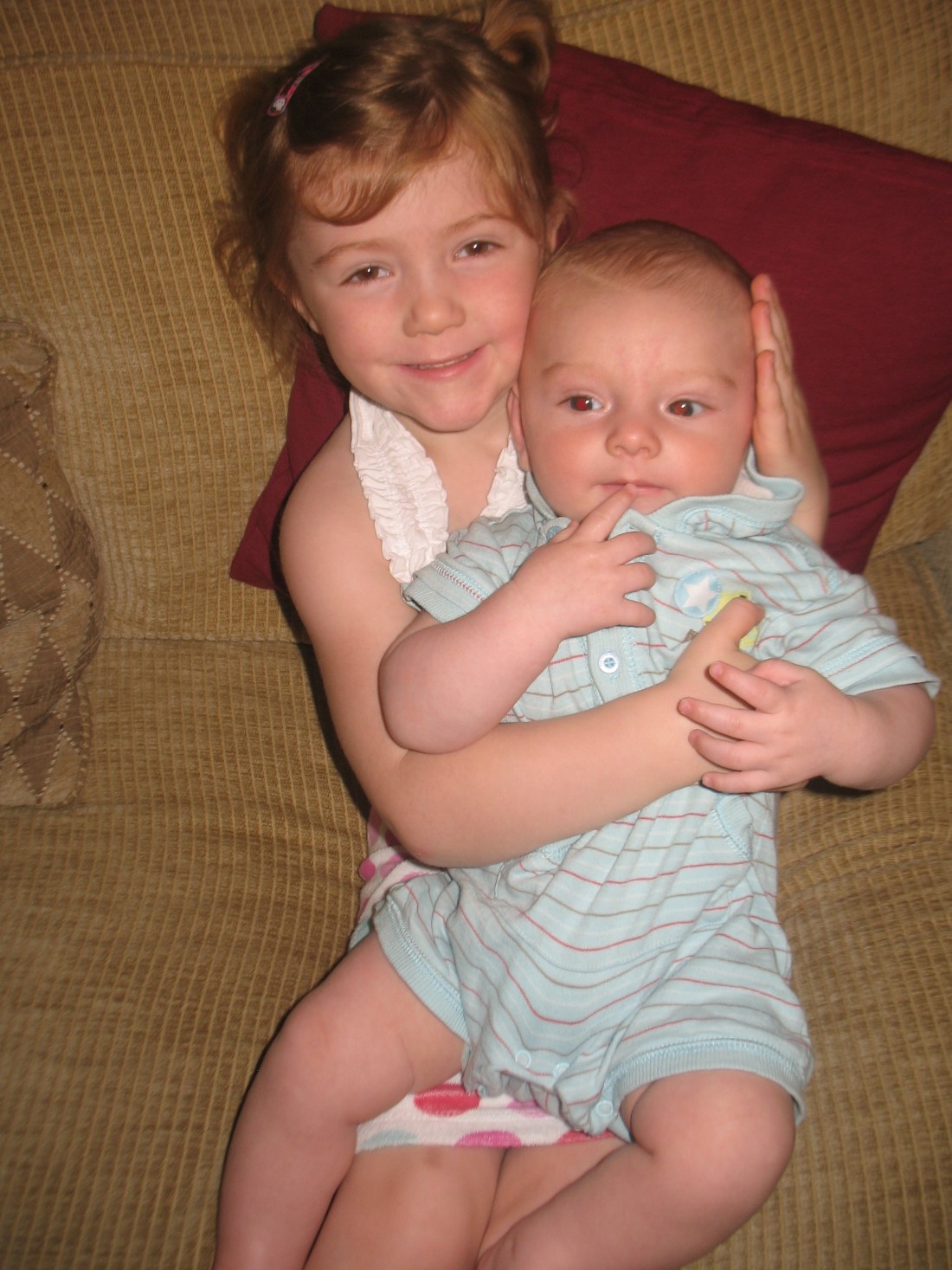
AS I drive my Citroën into the driveway, I am thrilled to see our sunflower yellow front door, the green privet hedges along our long garden, the picket fence along the front lawn and the solid Edwardian stonework of our century-old semi-detached home. Our children, 8 and 4, are jabbering away in the back, telling me about their day, what they did at school, who they played with and what they have eaten for dinner. We are so fortunate : the four-year gap between our children really works. There is no competition and they truly adore each other. Our daughter’s dearest wish, from the day she could speak until the day her brother was born, was for us to give her a sibling. To this day, if you ask her what is the greatest gift she has ever received, she will always say it was her little brother. I don’t think we’ve ever seen her smile a bigger smile than the moment she met him on day one in the hospital: he was perfect. And she’s been his friend, playmate and second mother ever since…

both2

I am so blessed.

A loving husband by my side, a beautiful home, a daughter and a son, loyal friends in the neighbourhood and family close by.

Ten years since we got together, we both had jobs in good schools, with leadership positions and options to move up the ladder. We were still in the Cotswolds, having sold our two-bed Victorian terrace near the station for the more spacious four-bed property nearer the children’s fabulous school. We even had an incredible childminder, who cooked yummy, often home-grown meals for the kids. And, what’s more, my Mum had been living around the corner for six years – she loved to take care of the children two days a week and saw them most days. They were able to have such a close bond with her and that, for me, was priceless.

We were living the perfect life…weren’t we?

Or were we?

Something felt not quite right. It was easy to blame so many things for that deep down unsettling sense of disquiet and it seemed impossible to change any of the key components that made up our life.

Mostly we blamed work. I was working 10-hour days, dropping the children at 7.45 and collecting them at 17.45. Steve had two hours a day commuting to his school. The worst part was not being able to leave work at work; the evenings were not our own. I would have an hour with the children whilst getting some dinner, then as soon as the children were in bed, we would begin the marking, or planning, or report writing. I remember, with some degree of shame, the nights when one of the children would come downstairs, unable to sleep or after a bad dream and instead of comfort, a cuddle, or kindness from a parent, they were greeted with frustration and annoyance that they were interrupting our work time.

#34

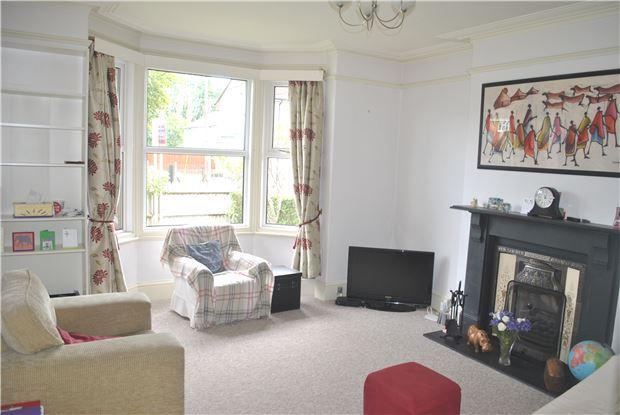
We were sitting in our beautifully decorated lounge, with its period fireplace, high ceilings and picture rails. But were we able to enjoy it? We regularly had discussions about our finances: how would we continue to pay for both mortgages, two cars, childcare etc etc?

Our home was situated in the cute countryside of the Cotswolds, yet how often did we find the time to don our walking boots and get out into the hills? Not often enough.

The community we lived in is among the 20% poorest in the UK and we had already been burgled twice.

And exercise. Exercise? There were very few opportunities for that.

I could see us slowly ageing, losing our youth, our health and for what? What is ‘career’ for? My childminder and my Mum were spending more time with my children than I was. When my son was little, I would not know from day to day who would see his first steps or hear his first words…what was this all for? Yes, I still loved to be in the classroom, but at that time teaching had become something else: it was all so political and complicated. I just wanted to teach teenagers to speak French!

That climate in education was making us grouchy with each other and that in turn put our relationship under stress.

And you know? The niggle underlying all of this, I had never envisaged my life like this. I didn’t plan to teach. To marry an Englishman. To live in England. The Cotswolds for goodness sake! I’m a free spirit. I was going to roam, to live in exotic places, to travel the world, speaking many languages. And NEVER have a mortgage, yet here I was with two!

I knew that from the outside we led the perfect life. Other people would dream of the life we had. But the unhappiness was creeping in, slowly but surely, spreading like an insidious mould.

We couldn’t carry on like this for much longer…


Will it last?

When I look back on it, all these years later, it’s hard to comprehend how I could go from feeling deeply, unhappily bereft, to a place of love and renewed happiness in such a short time. But would it last?

Many times, from inside and outside of our relationship, people have pondered, “what makes this work?” To all intents and purposes, we are so different. Where faith and spirituality are important to me, Steve holds onto a scientific curiosity with the world. Where I love to socialise with large groups of people and draw energy from a party, these things are more draining for the introvert in Steve. And where my response to most conversations is, “And how do you feel about that?”, emotional currency was not top of Steve’s repertoire. Logic ruled.

And yet…it seemed to be working. Despite all of that and more reasons beside.

We found each other so intrinsically fascinating, so ‘other’. Never would our brains tackle an issue from the same angle! But there was a comfortableness in time spent together. And the more we talked, the more we discovered that we had in common. There were many parallels in our upbringing and our life experiences. But most of all, we shared common values. Integrity bound us together: we always knew we could and would speak the absolute truth to each other. There have been no lies and no deceit.

There has been plenty of travelling and plenty of friendships; friendships formed, renewed or strengthened.

That first summer together was so meaningful. When I discovered that Steve had never really visited London, I picked up the phone to my fabulous Colombian friend, Catalina, who was teaching in London and living with her husband in Lewisham. They were happy to host us so that I could show Steve the sights of the Capital – we had a fantastic few days being tourists.bridge of sighs

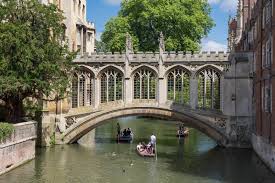
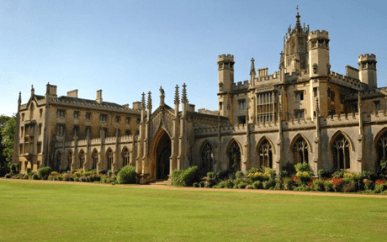
Then I rang and booked a night at St John’s. Steve had expressed immediate interest in seeing where I’d studied. For varied reasons, Cambridge is an important part of my story. I had first visited aged 8 when my second sister, Libby, was studying architecture there. Ten years later I followed in her footsteps, but reading Languages. For both of us, it seemed a privilege to study there; to walk daily through these ancient, symmetrical courtyards, courtesy of a full grant. On the Bridge of Sighs with Steve, I explained how 18-year-old me would pinch myself crossing the bridge to go and fetch my post each day. It was a dream. But I was never quite sure I was meant to be there, partially due to the ethereal beauty of the place and partially because it was SO hard. I struggled and lost confidence many times (the constant sense of not being good enough). But, as so often in my life, the people around me during those 3 Johnian years carried me through (along with the knowledge that Libby had come through the other side!) And I was delighted to be able to show Steve around (I’ve almost enjoyed Cambridge more since I left than I did at the time.) In addition, I was entirely single through university, so it felt pleasantly novel to walk down The Backs, beside the Cam, hand in hand with a man…

st john'sFrom Cambridge we travelled north. It already felt significant to go and meet our families and see the places we are from. Steve had met most of my family at the housewarming and Mum had been down to visit too. In fact Steve had to come and bale us out when we got lost on a walk in the Cotswolds! He then impressed Mum by cooking us a 3-course meal…the man knew how to dazzle the one who would be his mother-in-law. We’d also taken my baby niece to Warwick Castle together…for such a tall man, he was amazing with little ones; even shy ones would quickly be smiling and laughing at Steve.

In Ripon, the Yorkshire Dales, we stayed with my fourth sister, Helen, who lives close to Fountains Abbey, which is a perfect spot for a walk together. At reception we had a choice: to buy tickets for the day, or to take out a year’s membership. It just seemed like the logical thing to do, as we were heading up to Northumberland from here – many more historic houses and castles to explore. But afterwards I did wonder, was this merely pragmatic (just a tight northern bloke saving a few pounds) or were we already saying we would still be day tripping together in 2005?!

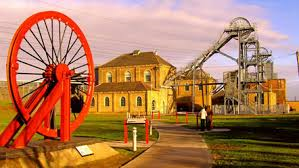
When we headed to Northumberland, to what had been the world’s largest coal mining village, a warm welcome awaited us. But at the same time, I was slightly at a loss. I hadn’t realised how strong the dialect was in Steve’s home town. I was used to Steve’s soft accent but he had been away nearly as long as he had lived there. ‘Gan’ was ‘go’. ‘Wor’ was ‘our’. ‘Me’ was ‘my’. ‘How’s ya fettle marra?’…what was I meant to reply? I didn’t want to seem rude. I am a northerner too. And a linguist to boot. This inability to communicate was embarrassing! Now I am aware that there are English: Geordie dictionaries and that Ashingtonian is a different dialect again – books can explain about the unique culture and language here – I could not. woodhorn

But there was no misunderstanding the generous hospitality of Steve’s Mam and Dad. It was as if they had never expected their son to bring home a young lady…after all, their friends had been grandparents for many years and many were already great-grandparents.

Despite the fact that conversation was a little stilted at first, the Harrison family seemed very happy that I had arrived in their lives. I hoped to have many more opportunities to get to know them better…